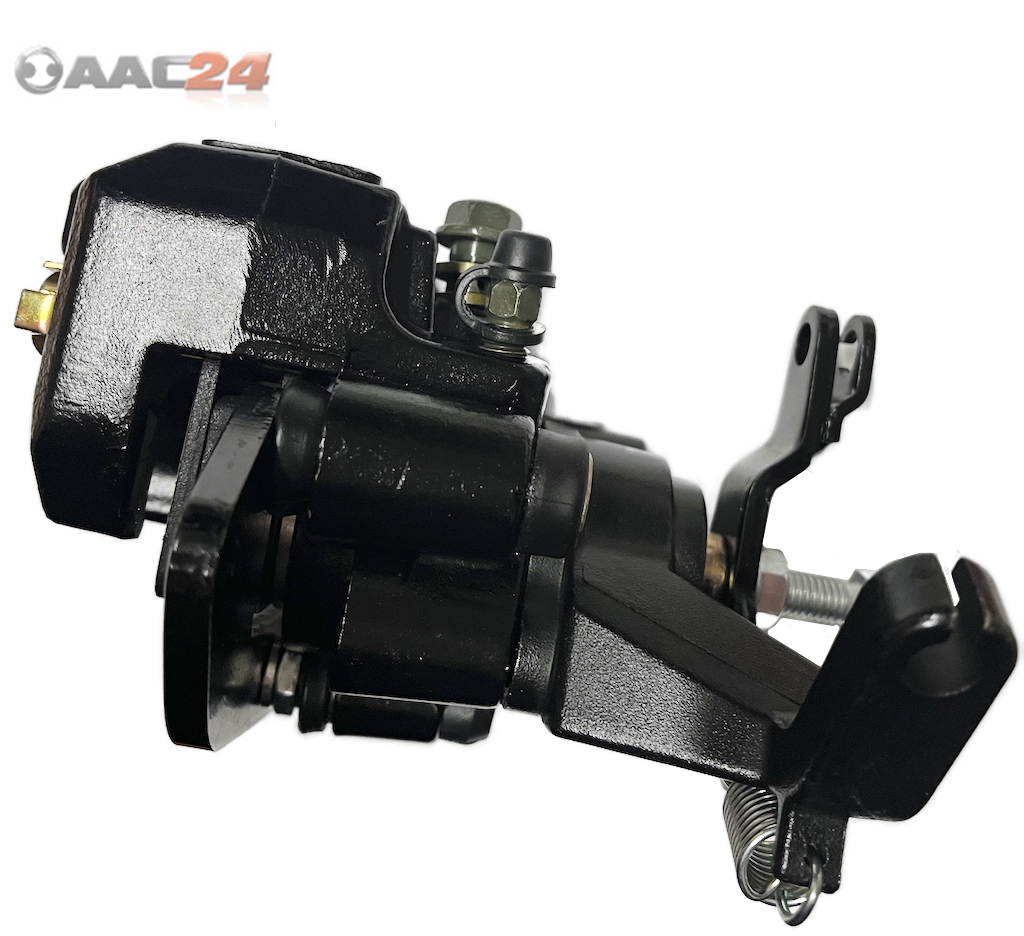
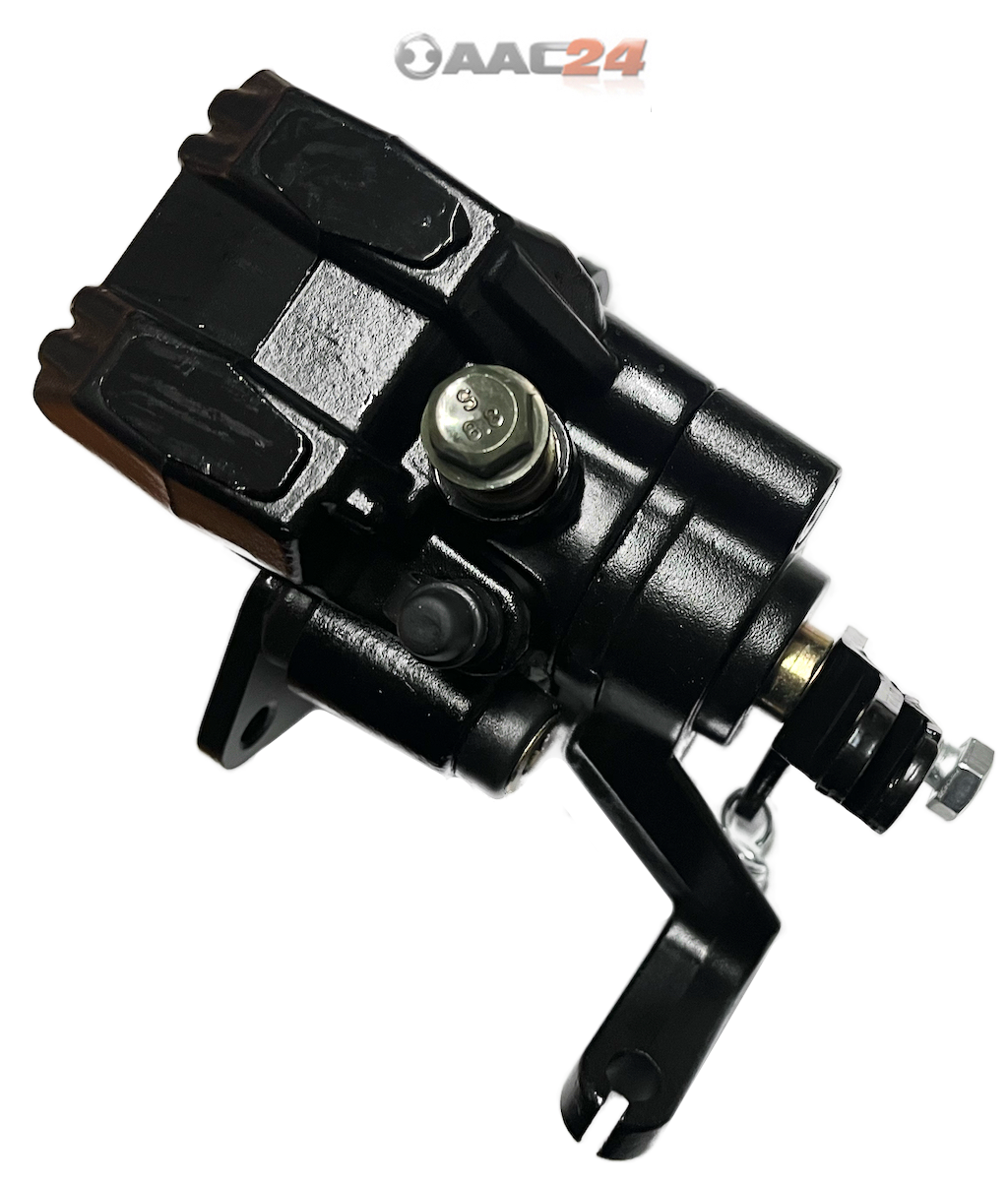
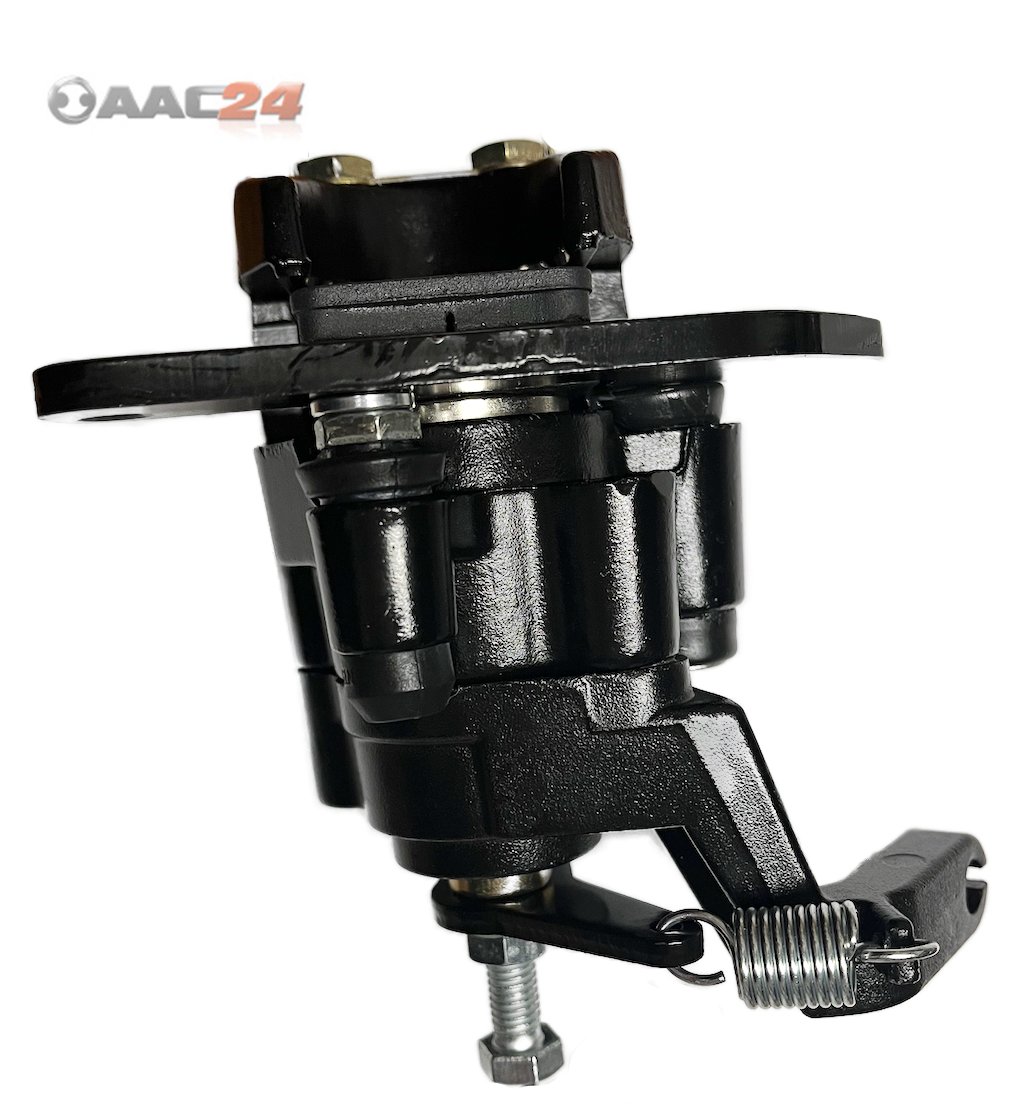
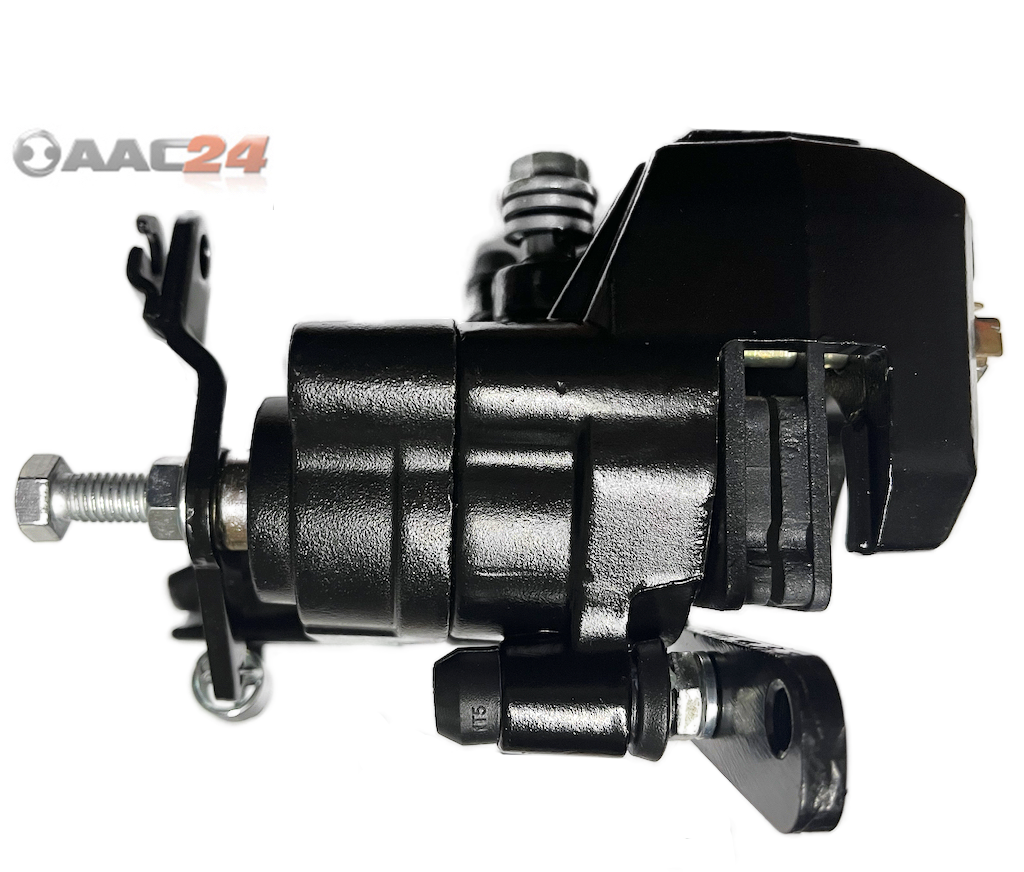
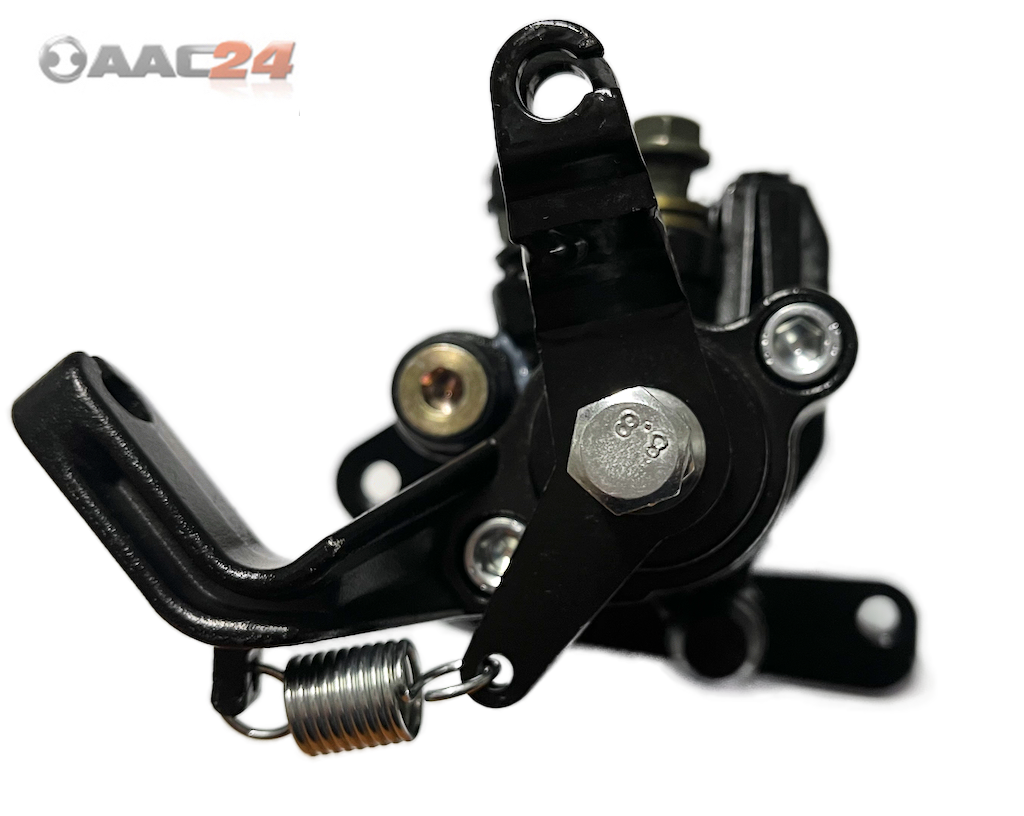
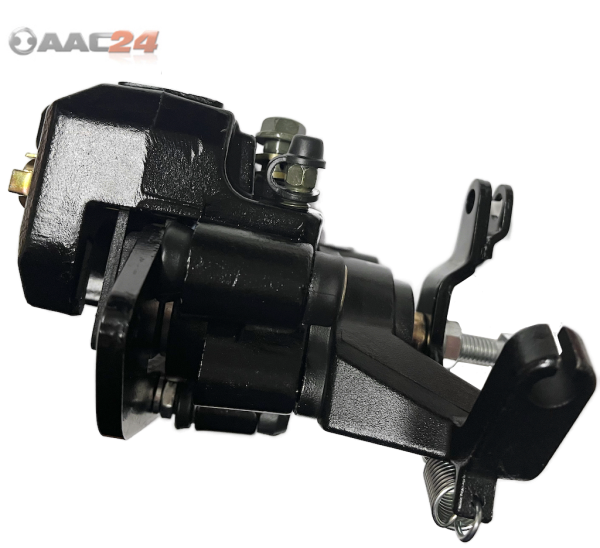
Product information "Rear Brake Caliper Assembly incl. Brake Pads for Kinroad XT250GK Buggy"
Maximum Stopping Power & Trail Safety! – Rear Brake Caliper Assembly incl. Brake Pads for Kinroad XT250GK Buggy
Ready-to-Install Hydraulic Rear Caliper – Complete with pre-installed brake pads for reliable braking performance
Restore crisp pedal feel and dependable stopping power to your off-road buggy! This Heavy-Duty Rear Brake Caliper Assembly is engineered specifically for the rear hydraulic braking system of the Kinroad XT250GK buggy. Supplied complete with pre-installed brake pads, it serves as a direct replacement for seized, leaking, or corroded stock calipers.
Off-road mud, water, and high braking temperatures rapidly degrade caliper seals and slide pins. A sticking piston causes dragging brakes, rotor warping, and hazardous loss of braking efficiency. Cast from durable corrosion-resistant alloy, this complete unit restores smooth piston actuation and strong, consistent clamping force.
Material: High-strength cast aluminum alloy with heat-resistant piston seals.
Features: Pre-assembled with brake pads for quick installation; smooth hydraulic piston movement.
Compatibility: Tailored for the Kinroad XT250GK 250cc Buggy and matching 250cc Chinese dune buggies / go-karts (Visual check and mounting bolt spacing verification required).
Visual & Mounting Check: Prior to installation, perform a visual check. Verify mounting bracket hole spacing, caliper body shape, banjo bolt thread pitch, and bleeder screw orientation against your original caliper.
Bleed Brake System Thoroughly: Always install new copper crush washers on the brake line banjo bolt. Fill the master cylinder with fresh brake fluid (DOT 3 / DOT 4 per vehicle specs) and bleed all air from the system until a firm pedal feel is achieved.
Bed-In & Safety Check: Check rear rotor condition before installing. Ensure the axle spins freely without excessive drag. Bed in the new brake pads gently over the first few miles, avoiding hard panic stops initially.
Related links to "Rear Brake Caliper Assembly incl. Brake Pads for Kinroad XT250GK Buggy"